
Elevate your selling with personal branding
25th November 2025 | Journal Of Sales Transformation
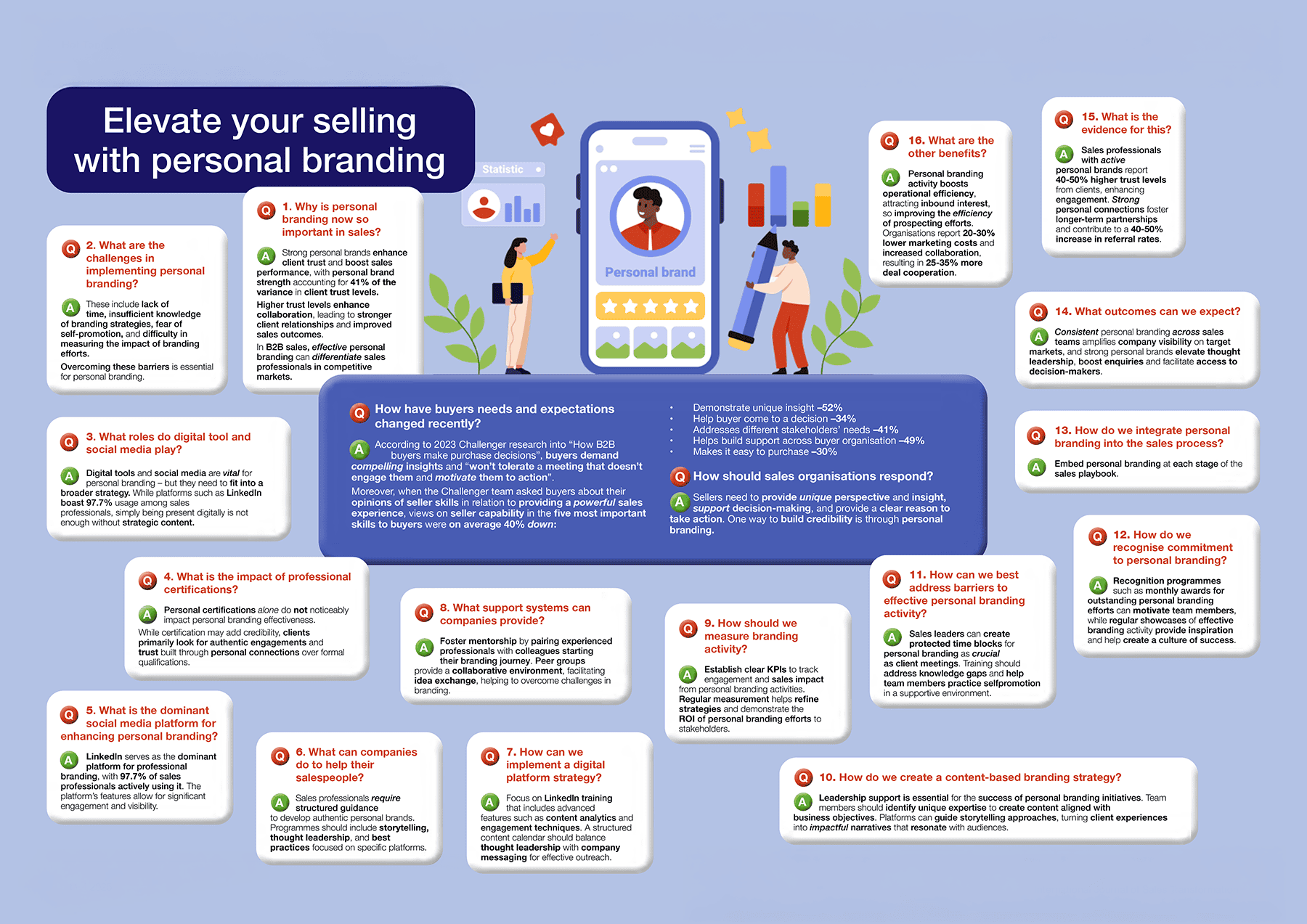
Q: How have buyers needs and expectations changed recently?
A: According to 2023 Challenger research into “How B2B buyers make purchase decisions”, buyers demand compelling insights and “won’t tolerate a meeting that doesn’t engage them and motivate them to action”.
Moreover, when the Challenger team asked buyers about their opinions of seller skills in relation to providing a powerful sales experience, views on seller capability in the five most important skills to buyers were on average 40% down:
- Demonstrate unique insight –52%
- Help buyer come to a decision –34%
- Addresses different stakeholders’ needs –41%
- Helps build support across buyer organisation –49%
- Makes it easy to purchase –30%
Q: How should sales organisations respond?
A: Sellers need to provide unique perspective andinsight, support decision-making, andprovide a clear reason to take action. One way tobuild credibilityis through personal branding.
Q: 1. Why is personal branding now so important in sales?
A: Strong personal brands enhance client trust and boost sales performance, with personal brand strength accounting for 41% of the variance inclient trust levels.
Higher trust levels enhance collaboration, leading to stronger client relationships and improved sales outcomes.
In B2B sales, effective personal branding can differentiate sales professionals in competitive markets.
Q: 2. What are the challenges in implementing personal branding?
A: These include lack of time, insufficient knowledge of branding strategies, fear of self-promotion, and difficulty in measuring the impact of branding efforts.
Overcoming these barriers is essential for personal branding.
Q: 3. What roles do digital tool and social media play?
A: Digital tools and social media are vital for personal branding – but they need to fit into a broader strategy.
While platforms such as LinkedIn boast 97.7% usage among sales professionals, simply being present digitally is not enough without strategic content.
Q: 4. What is the impact of professional certifications?
A: Personal certifications alone do not noticeably impact personal branding effectiveness.
While certification may add credibility, clients primarily look for authentic engagements and trust built through personal connections over formal qualifications.
Q: 5. What is the dominant social media platform for enhancing personal branding?
A: Linkedln serves as the dominant platform for professional branding, with 97.7% of sales professionals actively using it. The platform’s features allow for significant engagement and visibility.
Q: 6. What can companies do to help their salespeople?
A: Sales professionals require structured guidance to develop authentic personal brands. Programmes should include storytelling, thought leadership, and best practices focused on specific platforms.
Q: 7. How can we implement a digital platform strategy?
A: Focus on Linkedln training that includes advanced features such as content analytics and engagement techniques. A structured content calendar should balance thought leadership with company messaging for effective outreach.
Q: 8. What support systems can companies provide?
A: Foster mentorship by pairing experienced professionals with colleagues starting their branding journey. Peer groups provide a collaborative environment, facilitating idea exchange, helping to overcome challenges in branding.
Q: 9. How should we measure branding activity?
A: Establish clear KPls to track engagement and sales impact from personal branding activities. Regular measurement helps refine strategies and demonstrate the ROI of personal branding efforts to stakeholders.
Q: 10. How do we create a content-based branding strategy?
A: Leadership support is essential for the success of personal branding initiatives. Team members should identify unique expertise to create content aligned with business objectives. Platforms can guide storytelling approaches, turning client experiences into impactful narratives that resonate with audiences.
Q: 11. How can we best address barriers to effective personal branding activity?
A: Sales leaders can create protected time blocks for personal branding as crucial as client meetings. Training should address knowledge gaps and help team members practice selfpromotion in a supportive environment.
Q: 12. How do we recognise commitment to personal branding?
A: Recognition programmes such as monthly awards for outstanding personal branding efforts can motivate team members, while regular showcases of effective branding activity provide inspiration and help create a culture of success.
Q: 13. How do we integrate personal branding into the sales process?
A: Embed personal branding at each stage of the sales playbook.
Q: 14. What outcomes can we expect?
A: Consistent personal branding across sales teams amplifies company visibility on target markets, and strong personal brands elevate thought leadership, boost enquiries and facilitate access to decision-makers.
Q: 15. What is the evidence for this?
A: Sales professionals with active personal brands report 40-50% higher trust levels from clients, enhancing engagement. Strong personal connections foster longer-term partnerships and contribute to a 40-50% increase in referral rates.
Q: 16. What are the other benefits?
A: Personal branding activity boosts operational efficiency, attracting inbound interest, so improving the efficiency of prospecting efforts. Organisations report 20-30% lower marketing costs and increased collaboration, resulting in 25-35% more deal cooperation.
